Mrs. Umney
The Canterville GhostMrs. Umney is the housekeeper at Canterville Chase and one of the house’s closest human witnesses to its history of haunting. She welcomes the Otis family into a home whose supernatural reputation she takes seriously, identifies the bloodstain in the library as evidence of murder, and warns her new employers that the household faces trouble. Her long service binds her to the old family’s fearful past, while her presence at Sir Simon’s funeral marks the ending of the haunting she has endured for more than fifty years.
Identity and Position at the Chase
Mrs. Umney is an old woman dressed in black silk, with a white cap and apron, who receives the Otis family at the door of Canterville Chase. Mrs. Otis has agreed, at Lady Canterville’s earnest request, to retain her in her former position as housekeeper. The arrangement places her between the old household and its new American owners: she remains a servant in the house, but also carries knowledge of the history that the newcomers initially dismiss.
She leads the family through the Tudor hall to the library, where tea has been laid out, and waits on them as they look around. Her manner is described as quaint and old-fashioned. Her formal welcome gives way almost immediately to a more ominous role when Mrs. Otis notices the stain near the fireplace and asks about it.
The Bloodstain and the House’s Past
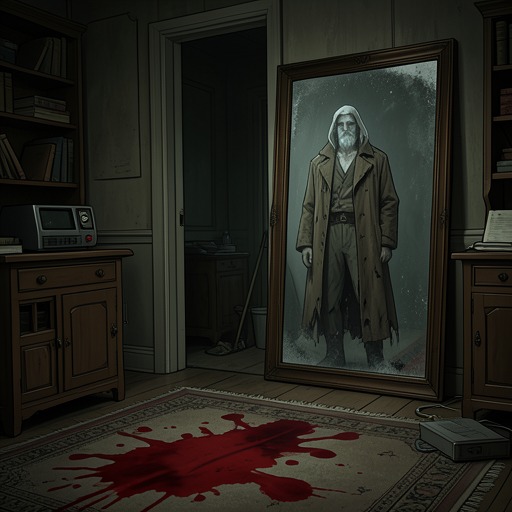
Mrs. Umney confirms that blood was spilled on the spot. When Washington Otis removes the stain with a commercial cleaner, she explains why it cannot be treated as an ordinary mark: it is the blood of Lady Eleanore de Canterville, murdered there by her husband, Sir Simon de Canterville, in 1575. She says Sir Simon survived Lady Eleanore by nine years, then disappeared under mysterious circumstances; his body was never found, and his guilty spirit still haunted the Chase. The stain, she adds, had long been admired by tourists and others, but could not be removed.
Her account supplies the household with a specific history behind what had first seemed to Mrs. Otis an accidental spill. The family responds by trying to clean the stain rather than treating it as a warning. Its later reappearance, even after the library has been locked, confirms that Washington’s first success has not settled the matter. Mrs. Umney’s explanation thus stands at the beginning of the conflict between the house’s inherited supernatural history and the Otises’ confidence in modern remedies.
Warnings and the Otis Family
The attempt to erase the stain is followed by a flash of lightning and thunder, and Mrs. Umney faints. Mr. Otis treats the incident as a practical inconvenience, suggesting that the fainting be charged to her like breakages. She soon recovers, but is extremely upset and sternly warns him to beware of trouble coming to the house.
Mrs. Umney grounds her warning in her own experience. She tells Mr. Otis that she has seen things with her own eyes that would frighten anyone, and that the terrible events in the house have kept her awake on many nights. The Otises warmly assure her that they are not afraid of ghosts, a response that does not dispel her concern. Before leaving for her room, she invokes Providence’s blessings on her new master and mistress. Her fear is not presented as mere hearsay: she speaks as a witness whose life in the house has been shaped by its reputation and recurring disturbances.
That experience reaches back across decades. The family history includes the report that Lady Canterville often slept little because of mysterious noises in the corridor and library, and Mrs. Umney later receives a place in the funeral party because the ghost had frightened her for more than fifty years. Her warnings therefore register both a personal burden and the persistence of the Chase’s old history, even as the new owners initially answer it with dismissal, jokes, and household products.
The Haunting’s End and the Funeral
When Virginia returns after her disappearance, she tells her family that Sir Simon is dead and leads them through a secret passage into the small room where his remains are found chained to an iron ring. Virginia kneels beside the skeleton and prays. The discovery turns the story Mrs. Umney had told about a guilty spirit into a material account of confinement and death; the ghost’s history is no longer only a legend attached to the library stain.
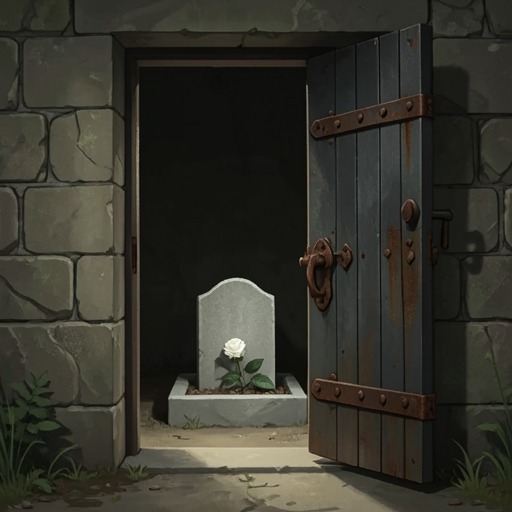
Four days later, Mrs. Umney accompanies the funeral procession from Canterville Chase. The burial takes place at night in the churchyard, where Lord Canterville is chief mourner and the Rev. Augustus Dampier reads the service. Mrs. Umney rides in the last carriage. Her inclusion is explicitly understood as fitting because she had been frightened by the ghost for more than fifty years and had a right to see the last of him. The procession gives her long experience of the haunting a place in the ceremony that closes it: she is not simply left behind when the ghost disappears, but included among those who witness his burial.
Narrative Role
Mrs. Umney links inherited accounts of the Chase to events the Otis family can observe for themselves. Her explanation of the stain establishes the history of Lady Eleanore’s murder and Sir Simon’s disappearance; her later warnings make clear that, for her, the house’s dangers are a matter of lived experience. The contrast between her alarm and the Otises’ confident practicality helps set the story’s comic conflict in motion, but her role is not limited to supplying exposition. Her decades of fear are acknowledged in the funeral’s social ritual, where her presence marks the human cost of the haunting and the finality of its end.